Embellishment vs. The Void
First excerpt from my Google Doc archive

AN INTRODUCTION
I have updates to report, but I’m too scattered to reflect on them. The last time I was in your inbox, it was January and I declared how much more I’d be running in 2026. Well, I’m working on it. Back then I was still in grad school; now I’m graduated. The degree is in the mail according to the powers that be!
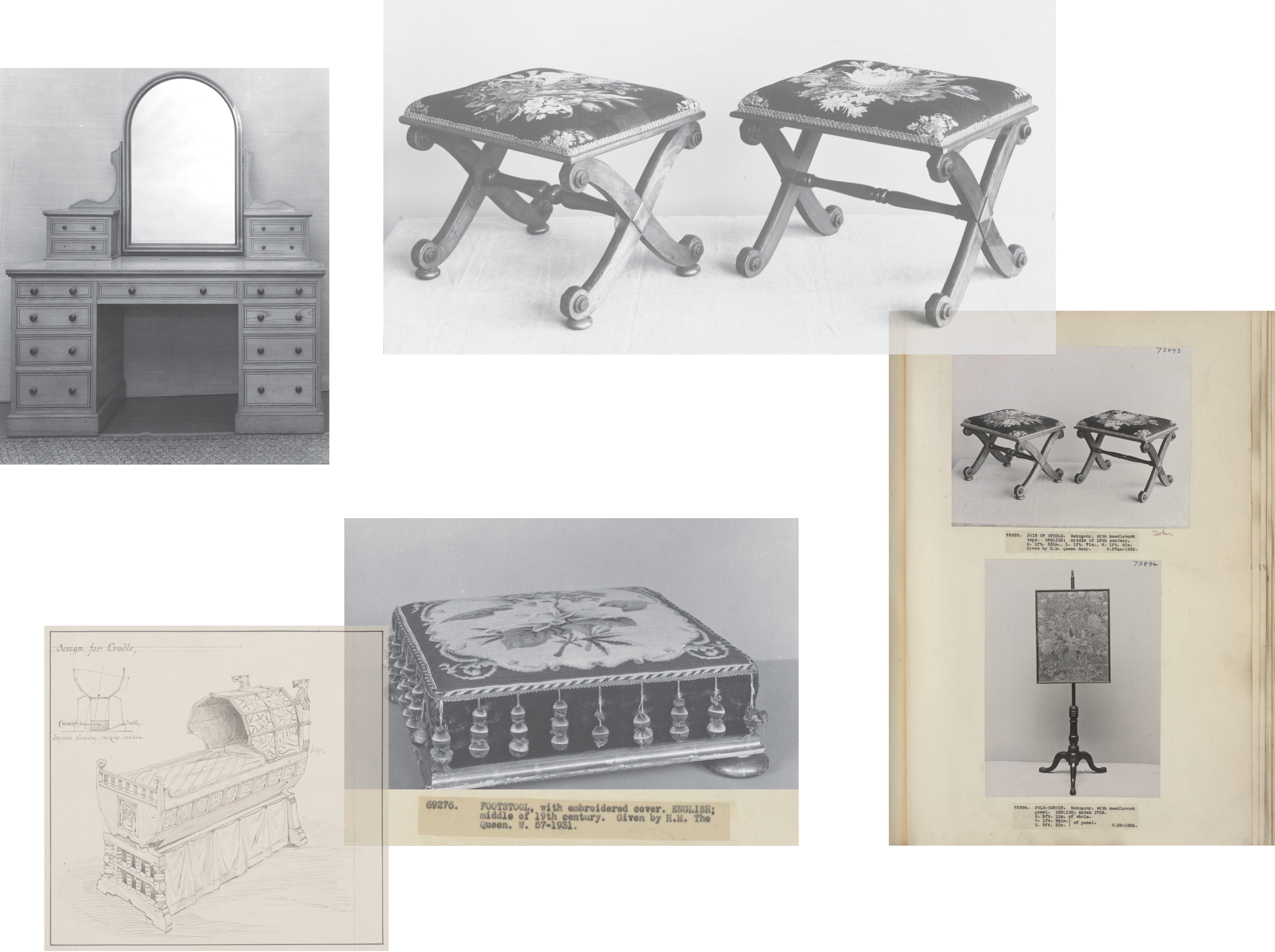
Let’s begin this series of post-MFA-more-frequently-sent-newsletters with something fresh to Design in Verse: for three years I’ve kept an archive of quotes in a Google Doc. I open up the tab when I want to record specific lines—specific sentiments—from whatever book I am reading. Some of the quotes pertain to objects, including the below passage from Nicolette Polek’s incantatory novel, Bitter Water Opera.
TEXT: BITTER WATER OPERA
“The Victorians had a fear of empty spaces, so they’d overdecorate, the tour guide explained, pointing at the corners of the house, filled with chairs, rugs, statuettes, rolled-up maps, end tables, desks, ashtrays, umbrella holders, pottery, paintings everywhere, large wooden egrets, gongs, hourglasses, historical tiles, grandfather clocks, rusty levered boxes, an abacus in front of another abacus, calendars, chimes, opera masks, and the walls themselves were covered in elaborate wallpaper—patterns of overlapping leaves, curly vines, snails, fountains, cherubs, small red birds. Victorians even covered the legs of furniture, afraid of that pulsing unknown.”
—Nicolette Polek, Bitter Water Opera
I had not considered Victorian embellishment to be fear-based before reading this passage. The first sentence is bursting at the proverbial seams with visual detail. But it’s the second one, where Polek likens emptiness to a pulsing unknown, which settled into the corners of my mind. The novel centers on Gia, a depressed film professor struggling through a break up, who attempts to rebuild herself by forming a friendship with the ghost of Marta Becket (a real-life eccentric dancer who built a theatre in the desert) whom she has successfully summoned.


I had to research in order to catch up to the Victorian history that Polek draws upon. I learned that “fear of empty space” has its own Latin phrase: horror vacui. It was the Italian art critic and scholar Mario Praz who first used horror vacui to critique the excessive ornamentation of Victorian interiors. Since then, it has become a high-brow insult for maximalist composition and outsider art. When Praz used it, he was drawing upon Aristotle’s hypothesis that nature abhors a vacuum.
I can picture nature filling a void—vines climbing highway barriers in the abundance of carbon-dioxide emissions; blue mold claiming the space where a single slice has been cut from a lemon. What is less easy to picture is Aristotle’s belief that because a void is nothingness, it cannot be said to exist at all. How can empty space not exist when I find it so soothing?
Which is what Polek sets the reader up to question as Gia searches for ways to fill her persistent feeling of emptiness. After a desert encounter with some great presence, Gia drives away with her windows open, noting, “ I was surrounded by emptiness, and didn’t wish to fill it.” Maybe the void is not nothingness because it is God. And maybe, if God exists, so too, does emptiness.
[If this doesn’t fully make sense but you’re intrigued, I recommend reading the book.]
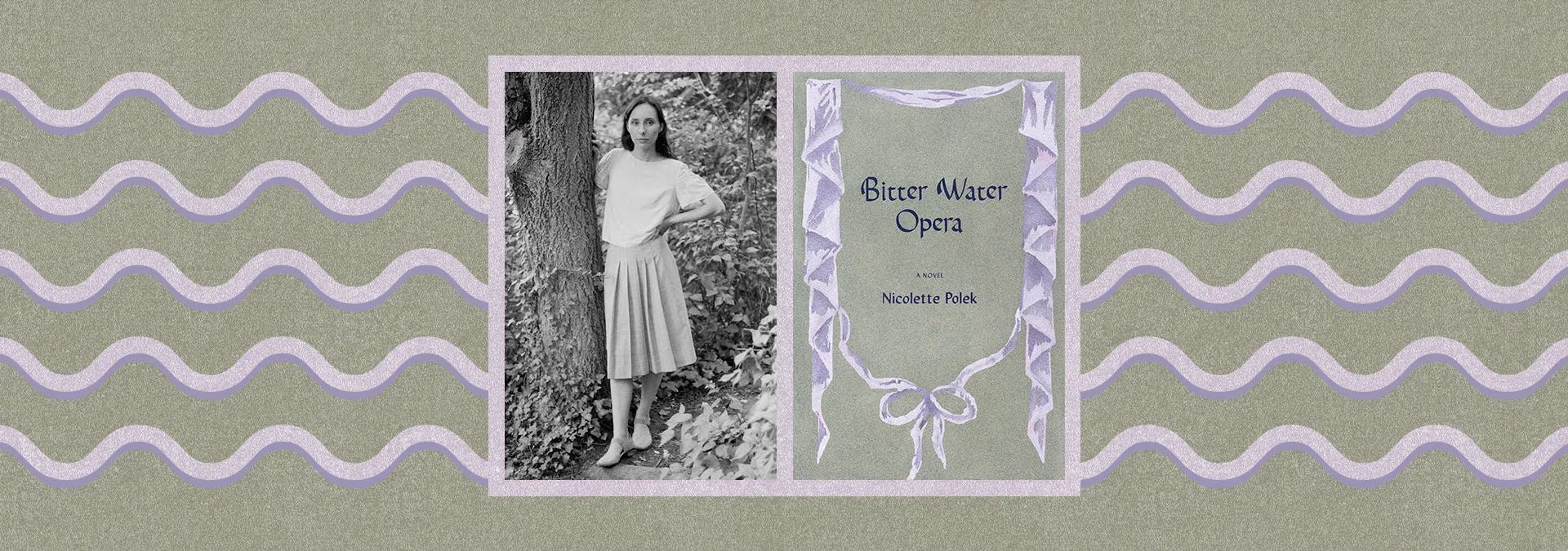
IMAGE: VICTORIAN FURNISHINGS
How fitting to consult the V&A considering the museum is named after Queen Victoria (whose reign covers the Victorian period). In 1899, the Queen herself laid the foundation stone for the museum’s new building on Exhibition Road.
ON MY MIND: IN AN OPEN TAB OR A TOTE BAG
Night Knowledge: What I Learned at the Club by Aria Aber, The Yale Review / I don’t really get techno (sorry friends), nor do I frequent nightclubs. And yet, I loved this essay. Another reason for me to read Aber’s novel, Good Girl, this summer.
Q: Do you remember first hearing Jewel say faggot? by Stephen S. Mills, The Offing / The early aughts: captured in a prose poem.
Small Scale Sinners: Stories by Mahreen Sohail / If I said Sohail is my favorite new voice in contemporary fiction, would you believe me? My current copy is a library loaner but my permanent one is in the mail. Her talent is so great it is somehow both humbling and inspiring.
Transcription: A Novel by Ben Lerner / My husband got us tickets to the release at Pioneer Works with Alexandra Schwartz back in April, but you can watch her convo with Lerner on youtube here. People have a lot of thoughts on Ben Lerner. Brandon Taylor’s review on Book Forum captures my feelings on the novel itself, in an articulate and minimally salty (I think) sort of way.
Siri Hustvedt: ‘Grief doesn’t stay the same, even though it doesn’t go away’ by Hannah Marriott, Financial Times / Hustvedt’s new memoir, Ghost Stories, centers on the loss of her husband of 43 years, the author Paul Auster. I plan to read this behind cover of sunglasses on the beach this summer.
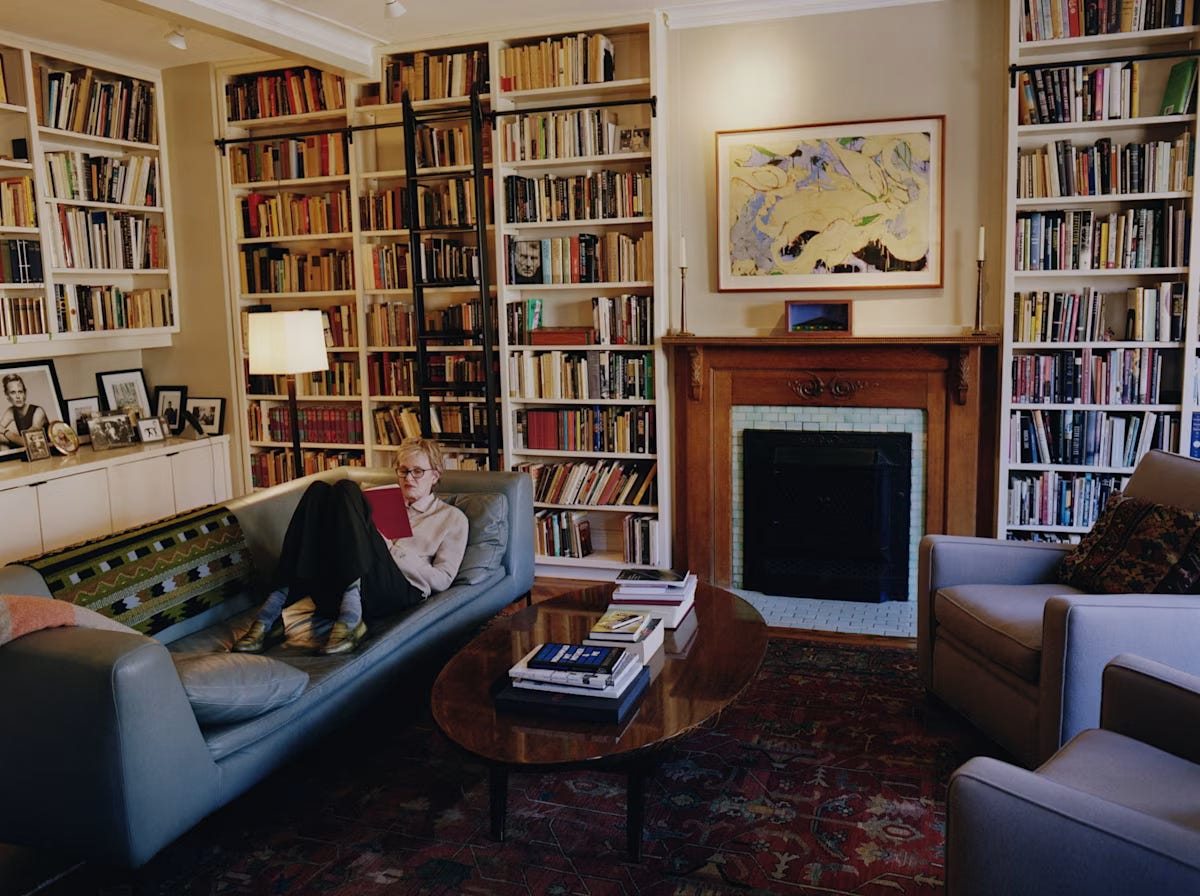
The library of two writers despite “pruning” every five years. Beautiful—more stunning vignettes (and Biedermeier furniture) in the FT feature.